15 Big Data Analysis Solutions Used by Top Enterprises
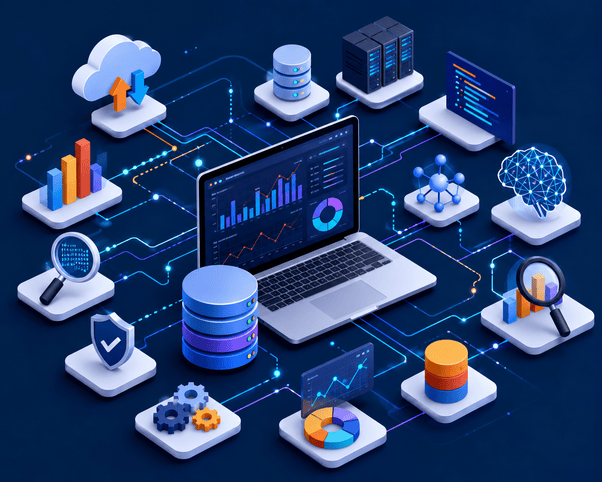
Data has become one of the most valuable business assets. Every customer interaction, transaction, and operational process generates information that can help organizations make smarter decisions. However, raw data alone isn't enough businesses need the right big data analysis solutions to transform massive datasets into meaningful insights.
Successful implementation also depends on robust data engineering services, which help businesses collect, integrate, clean, and prepare data from multiple sources. A strong data foundation ensures analytics platforms deliver accurate insights and support scalable decision-making.
Enterprises today are turning to a variety of cutting-edge technologies that offer them ways to increase efficiency, cut costs, personalize customer experiences and give themselves an edge in the market.
Let's look at 15 of the best big data analysis solutions, and the big data tools and techniques that are propelling today's data-driven companies.
What Are Big Data Analysis Solutions?
Big data analysis solutions are technologies, platforms and methodologies used to collect, analyze, process and visualize extremely large and complex data sets. These solutions allow businesses to recognize trends, pinpoint anomalies, forecast future consequences, and make decisions based on data and facts.
Today, cloud, artificial intelligence, machine learning, and advanced analytics are all part of the mix to gain the greatest benefits from data.
1. Data Warehousing Solutions
A centralized data warehouse combines information from a number of business systems into a centralized repository for reporting and analytics.
Benefits
- Unified business reporting
- Faster query performance
- Improved data consistency
- Better decision-making
Some of the most common tools are Snowflake, Amazon Redshift, Google BigQuery, and Azure Synapse Analytics.
2. Data Lakes
Data lakes hold the data in its natural format, structured, semi-structured and unstructured, unlike traditional warehouses.
- Data Lakes are used by organizations to:
- IoT analytics
- AI model training
- Customer behavior analysis
- Log management
3. Business Intelligence Platforms
Business Intelligence (BI) tools convert raw data into interactive dashboards and reports. Business intelligence solutions enable businesses to transform data into easily understandable dashboards, enabling stakeholders to monitor KPIs, trends, and make informed business decisions.
Key capabilities include:
KPI tracking
Executive dashboards
Sales analytics
Financial reporting
Operational insights
Some examples are Power BI, Tableau and Looker.
4. Predictive Analytics
The foundation of predictive analytics is the use of past data and algorithms to make predictions.
Common applications include:
- Sales forecasting
- Customer churn prediction
- Demand planning
- Fraud detection
- Inventory optimization
5. Real-Time Analytics
Many enterprises require immediate insights instead of waiting for batch reports.
Real-time analytics supports:
- Fraud prevention
- Website monitoring
- Financial transactions
- Fleet tracking
- Manufacturing monitoring
6. Machine Learning Analytics
Machine learning helps organizations to automatically detect patterns which humans may not be able to see.
Use cases include:
- Recommendation engines
- Predictive maintenance
- Image recognition
- Customer segmentation
- Risk assessment
7. Customer Analytics Solutions
Customer analytics is the process of analysing the data across channels to get insights into customer buying behaviour and improve customer experiences.
Businesses can:
- Personalize marketing
- Increase customer retention
- Improve conversion rates
- Identify high-value customers
8. Marketing Analytics Platforms
The high-tech analytics enable marketing departments to monitor the effectiveness of marketing campaigns through multiple channels.
Key metrics include:
- Customer acquisition cost
- Return on ad spend
- Conversion rates
- Customer lifetime value
- Attribution modeling
9. Financial Analytics
Financial institutions have been depending on the study of vast amounts of data from transactions to make more money and to reduce risks.
Applications include:
- Budget forecasting
- Revenue analysis
- Expense optimization
- Fraud monitoring
- Regulatory reporting
10. Supply Chain Analytics
The predictive power of supply chain analytics can help organizations optimize their inventories, logistics, and procurement processes, thereby reducing costs and enhancing efficiency.
Benefits include:
- Reduced operational costs
- Improved forecasting
- Better supplier management
- Faster deliveries
11. Cloud-Based Analytics Platforms
Cloud analytics has become the modern day answer to flexibility and scalability, as it's the preferred choice of today's businesses.
Advantages include:
- Lower infrastructure costs
- Automatic updates
- High availability
- Elastic computing resources
- Easy collaboration
12. Data Visualization Solutions
Visual dashboards enable stakeholders to get a handle on the complex data sets.
Common visualization techniques involve:
- Heat maps
- Trend charts
- Interactive dashboards
- Geographic mapping
- Performance scorecards
13. AI-Powered Analytics
AI creates more powerful traditional analytics by automating the discovery of data and producing actionable recommendations.
AI-powered analytics helps organizations:
- Detect anomalies
- Automate reporting
- Generate insights faster
- Improve forecasting accuracy
14. Data Governance and Quality Solutions
Reliable analytics rely on the accuracy, security and good governance of data.
Data governance solutions offer:
- Data quality management
- Compliance monitoring
- Access control
- Metadata management
- Data lineage
15. End-to-End Big Data Platforms
Today, many companies would like to have all these functions (data ingestion, storage, processing, analytics, visualization, and AI) within a single platform.
These all-in-one big data analysis solutions help to simplify big data complexity, and also help to scale the analytics initiatives across the departments.
Big Data Tools and Techniques Used by Leading Enterprises
The top enterprises use these big data tools and techniques.
Effective companies integrate several “big data tools and methods” in order to get the most out of their data. The most popular methods include:
- Apache Spark
- Apache Hadoop
- Kafka
- Databricks
- Snowflake
- Google BigQuery
- Microsoft Azure Synapse
- Amazon Redshift
- Power BI
- Tableau
- Machine Learning
- Artificial Intelligence
- Predictive Analytics
- Data Mining
- Stream Processing
- ETL/ELT Pipelines
- Data Visualization
- Cloud Analytics
The selection of the right tools of big data data relies on your business goals, infrastructure, scalability needs, and your analytics maturity.
How HeadToNet Helps Businesses Unlock Big Data
Making a platform selection of an enterprise-grade analytics solution isn't the only thing that matters. Organizations require a strategic partner that's able to grasp data architecture, cloud technologies, business intelligence and analytics modernization.
We provide businesses with scalable big data analysis solutions that they can use to meet their operational and strategic requirements at HeadToNet. Our staff are experts at creating contemporary data systems to convert disjointed data into business intelligence.
Our expertise includes:
Big data architecture and consulting
Data engineering
Implementing cloud data platform.
Business intelligence solutions
Data warehouse modernization
Analytics dashboards
The application of AI/Machine learning systems.The use of AI/Machine Learning systems.
Data governance and data quality management are essential. Data governance and data quality management are crucial.
From a new start to upgrading an old setup, HeadToNet offers scalable solutions to enable your organization to make faster data-driven decisions.
Choosing the Right Big Data Analysis Solution
When looking at analytics platforms you should take into consideration:
- Business objectives
- The volume and complexity of data. Data size and complexity.
- Integration capabilities
- Security and compliance
- Scalability
- Real-time processing needs
- Artificial Intelligence, machine learning and support
- The total cost of owning the asset.
- Finding the right mix of technology and know-how guarantees long term success.
Conclusion
In today's business landscape, companies need to be able to compete in a data-driven world by making use of advanced big data analysis solutions. The optimal use of the appropriate technology stack will allow organizations to make smarter decisions and reveal new opportunities for growth, from predictive analytics to AI-powered insights or cloud platforms and business intelligence.
Equally crucial is the selection of experienced implementation partners that grasp the linkage of technology and business objectives. Organizations can achieve this by taking advantage of robust big data tools and techniques, and then choosing the right tools of big data to create scalable analytics ecosystems that provide measurable business value for years to come.
StackAudit Offer