What Is the Custom CRM Development Cost in 2026?
Companies that want to grow quickly now need to buy a CRM system. In 2026, custom CRM development cost between $20,000 and $200,000 or more. The price will depend on how well it interfaces with other systems, how hard it is to use, and what features it has. A basic CRM may cost between $20,000 and $40,000; a mid-range one could cost between $50,000 and $120,000; and a high-end or enterprise-grade platform could cost more than $150,000.
The average CRM development cost also includes deployment, training people, and ongoing maintenance, which adds 15–25% to the cost each year. If businesses know these costs ahead of time, they may plan better and avoid having to pay for things they didn't expect.
Why Custom CRM Development Cost Matters
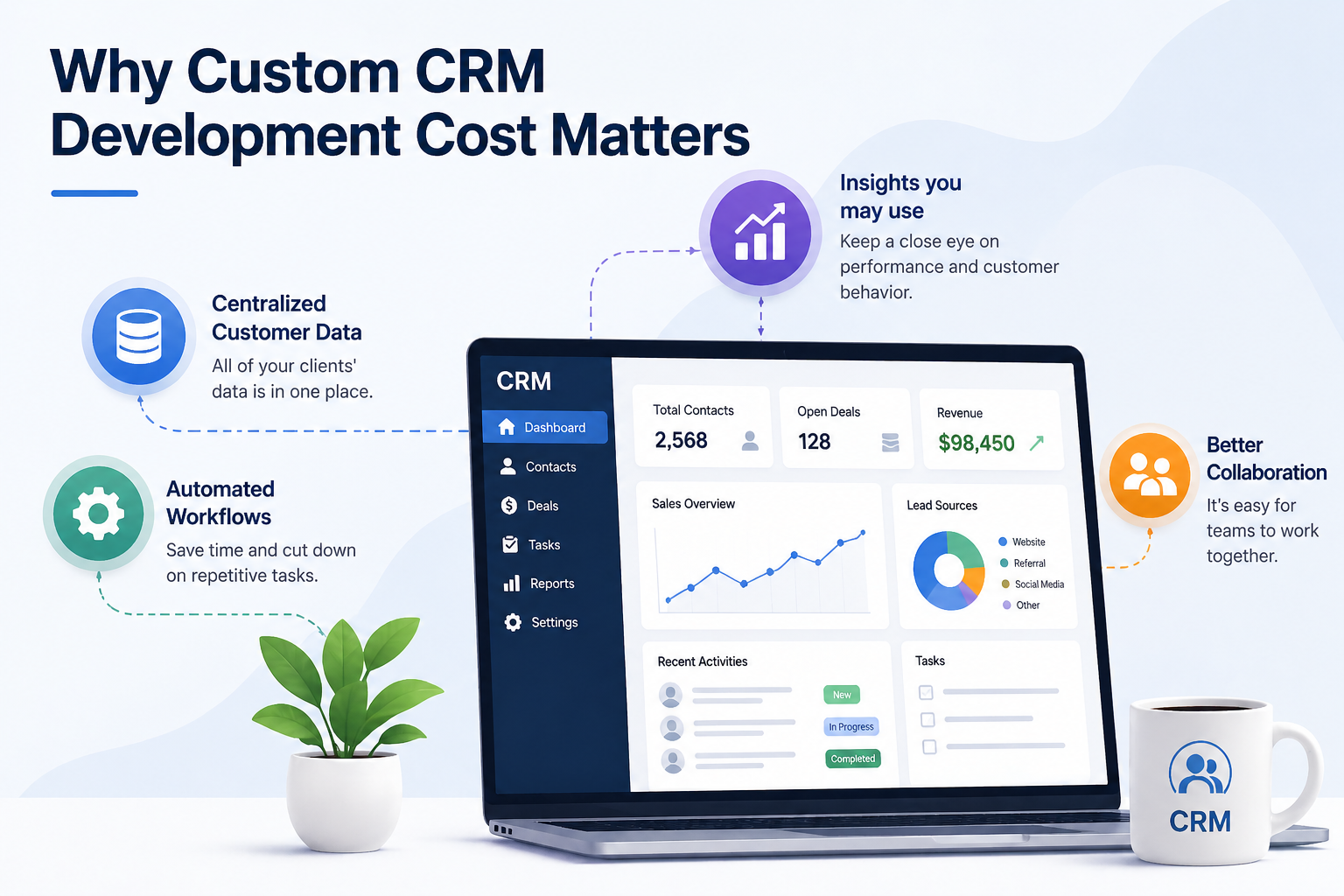
A successful CRM does more than just keep track of your contacts; it becomes the most important part of your customer strategy. By combining all of your sales and marketing data in one place and automating processes that need to be done again and over again, CRMs let your teams work smarter, not harder. Here are some of the primary benefits:
- Centralized Customer Data: All of your clients' data is in one place.
- Automated Workflows: Save time and cut down on tasks that need to be done over and over again.
- Insights you may use: Keep a close eye on how well sales are doing and how customers are acting.
- Better Collaboration: It's easy for teams to work together.
With a personalized CRM, your business may grow without having to cope with the limitations of ready-made software.
Ready to build a CRM that fits your business perfectly? Get in touch with HeadToNet today and start your custom CRM journey.
[Get a Consultation]
Factors That Affect the Custom CRM Development Cost
There are a few things that will determine how much you pay for a CRM:
- Characteristics and Complexity: More automation, analysis, and dashboard features make things more complicated and expensive.
- Platform Consideration: CRMs that solely work on the web are less expensive than CRMs that work on mobile devices and other platforms.
- Integration: Adding email marketing, ERP systems, or other business apps to your CRM will take more effort to develop.
- Type of CRM: The price of operational, analytical, and collaborative CRMs depends on how complicated they are.
Choosing the Right CRM Approach
Not every firm needs a completely custom build. Here's a breakdown:
However, the most flexible solution is the creation of a unique CRM, but one has to make sure of future prospects in advance. In case one cooperates with the right agency like HeadToNet, one may be sure that they will not overpay for services, including CRM implementation cost.
Essential CRM Features
Among the necessary characteristics of the CRM system are the following:
- Lead management – proper monitoring of potential clients;
- Sales Pipeline Monitoring – monitoring of the whole process of selling;
- Contact management – maintaining client data;
- Activity management – tracking phone calls, appointments, tasks, etc.;
- Analytics – getting important data which can help in making a decision;
- Security functions – protecting private client information.
All these functions guarantee the effective use of a CRM in business.
CRM Development Cost Breakdown
This is a real look at the cost of CRM based on how hard it is to use:
Don't forget that yearly maintenance costs 15–25% of the original development cost for updates, support, and system optimization.
Tips to Keep Costs Manageable
- Start with an MVP: Put your attention on the most critical things first.
- Make Needs a Priority: At initially, stay clear from unnecessary modules.
- Choose Developers With Experience: It's important to find a balance between cost and competence.
- Use technology that can grow: Cloud-based solutions make future infrastructure less expensive.
- Plan integrations in steps: At launch, only include what you need.
Transform Your Customer Management with HeadToNet
HeadToNet is the ideal place to go if you need a CRM that fits all of your business needs. They make custom CRM solutions for businesses of all sizes, from small to large.
What sets HeadToNet apart is:
- Custom Solutions: Your CRM should fit how you do business, not the other way around.
- Integrations that operate perfectly: You may easily integrate your email, ERP, marketing, and other software without any problems.
- Flexible architecture: Your system will change as your business does, so you won't have to pay to rebuild it again.
- Consultation by an expert: Our knowledgeable developers and consultants make sure that everything runs well and that your firm gets the most out of its investment.
HeadToNet gives you a CRM that does more than just keep track of data; it also helps your organization grow.
Final Thoughts
The size of your business, what you want the CRM to perform, and what features you want it to have all affect how much it will cost to construct. Even while the first expenditure may seem large, a well-planned system saves time, makes sales more efficient, and helps the business grow for years.
Businesses may employ HeadToNet in creating a custom CRM that meets their needs, is user-friendly, and provides them with maximum ROI. Your company will be smarter and more efficient tomorrow because you invested money in a custom product today.
Build a scalable CRM without overspending partner with HeadToNet today.
[Contact Us]
FAQs
1. What is the average cost of CRM implementation?
Developing a CRM normally involves spending $20,000 to $150,000, among others. All this depends on how many changes a firm requires to the software, its size, and other factors. Examples of additional expenses include training, integration, and CRM implementation cost.
2. How long does it take to develop a custom CRM?
Setting up a simple CRM can take 2 to 4 months, while setting up a mid-level one can take 4 to 8 months. Advanced or commercial CRM solutions might take 6 to 12 months or longer, depending on how intricate they are.
3. What factors affect CRM development cost the most?
You should think about a few essential aspects, like how intricate the features are, what sort of CRM it is, and what platform (web or mobile) it is being created on. Customization and scalability needs also have a big effect on the ultimate cost.
4. Is a custom CRM better than a ready-made CRM?
A custom CRM enables you tweak features, add additional users, and have more control over them. This makes it great for businesses with unique workflows. It's quicker and cheaper to set up a pre-made CRM, but it might not be as good as a personalized one.
5. How can I reduce CRM development costs?
Starting with a minimum viable product (MVP), focusing on the most important features, keeping initial integrations to a minimum, and picking a tech stack that can expand with your business are all ways to save money. You can also avoid making mistakes that cost a lot of money by working with a development partner who has a lot of experience.
StackAudit Offer