Which Platform Is Best for Creating an Ecommerce Website?

In today's digital-first world, starting an online store is one of the best methods to expand a business. But with so many options, it might be hard to pick the right platform. Everyone, from new businesses to big companies, is looking for the finest website builder for online stores that offers performance, flexibility, and growth. If you're a business that wants to add custom features, knowing Shopify app development cost will help you manage your budget and make smart choices.
We'll go over the top 10 ecommerce builders in this guide, evaluate their features, and help you choose the best one for your business.
Which Ecommerce Platform Is Best?
When it comes to ecommerce platforms, there is no one "best" one. Your business goals, technical skills, and budget will help you choose the best option.
- Shopify is the best all-in-one solution.
- WooCommerce is best for customizing and controlling
- Wix is the best choice for novices.
- BigCommerce is the best choice for businesses who want to grow.
- Squarespace is best for brands that care about design.
Shopify is typically thought to be the greatest ecommerce platform for new businesses since it is easy to use, reliable, and comes with built-in capabilities.
What to Look for in an Ecommerce Platform
It is vital to consider the factors that will determine the success of your company before selecting the top 10 E-commerce builders.
- Ease of Use
There is no need for any technical knowledge when developing and running your business on a platform with an intuitive interface. Beginners should opt for platforms with drag-and-drop builders.
- Pricing & Long-Term Value
Most platforms may require a relatively low monthly fee, but other expenses such as transaction fees, plugins, and themes can be added. Remember to consider the cost of ownership all along.
- Customization & Flexibility
The platform you select for building your online store will be responsible for showcasing your brand. While there are builders such as WooCommerce that allow many customizations, others allow only little customization.
- SEO & Marketing Capabilities
To get more organic traffic and visibility, it's important to have built-in SEO tools, blogging options, and marketing integrations.
- Payment Gateways & Integrations
Being able to work with a lot of different payment systems and third-party apps makes things run more smoothly and gives customers a better experience.
Top 10 Ecommerce Website Builders
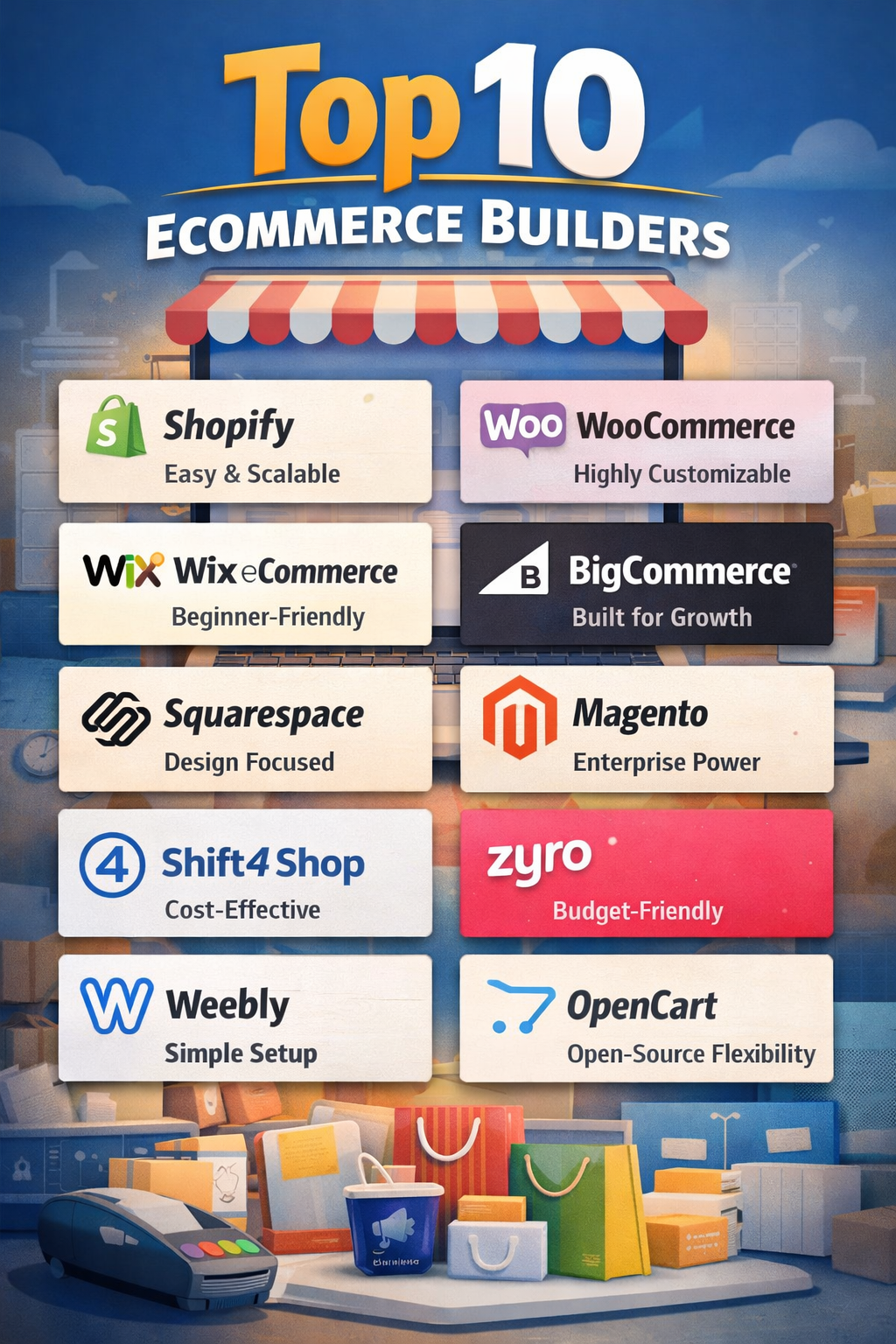
Let's take a closer look at the top 10 ecommerce builders and what makes each one stand out:
1. Shopify
Shopify is one of the most well-known online shopping sites in the world. It has everything you need, such hosting, security, and payment processing. Businesses can grow because of its app ecosystem.
Best for: new enterprises, small businesses, and brands that are growing
Main Strength: Easy to use and able to grow
2. WooCommerce
WooCommerce is a WordPress plugin that lets you run your online store anyway you want. It can be changed a lot, but you need to know a little bit about technology.
Best for: Developers and enterprises who need to be able to change things
Main Strength: Customization without limits
3. Wix eCommerce
Wix is easy to use for beginners and has a drag-and-drop feature. It works great for small stores, but it might not have all the advanced capabilities needed for big development.
Best for: Newbies
Key Strength: Being simple and affordable
4. BigCommerce
BigCommerce is made to help businesses grow. It has advanced features including selling on several channels, tools for search engine optimization (SEO), and great performance for big catalogs.
Best for: businesses that want to grow
Main Strength: Advanced features already included in
5. Squarespace
Squarespace is great for brands who care about looks and storytelling since it has beautiful templates.
Best for: businesses that are creative
Main Strength: Branding and design
6. Magento (Adobe Commerce)
Magento is a robust platform for businesses that offers unequaled flexibility and the potential to grow. But it needs a lot of money and time to develop.
Best for: Big businesses
Key Strength: Advanced customization
7. Shift4Shop
A cost-effective ecommerce solution with built-in functionality that makes it good for enterprises that want to save money.
Best for: enterprises that are small to medium-sized
Key Strength: Low Cost
8. Zyro
Zyro is a affordable and easy-to-use builder for small stores with modest demands.
Best for: People who are new and don't have a lot of money
Main Strength: Low cost
9. Weebly
Weebly is quick to set up and is a good choice for small businesses who are just starting out online.
Good for: People that are new
Key Strength: Easy to use
10. OpenCart
OpenCart is an open-source platform that gives you a lot of freedom and power, but you need to know how to use it.
Best for: Programmers
Main Strength: Customization is a key strength.
Best Ecommerce Platform for Startups
Startups need a platform that lets them get started quickly, test their ideas, and grow without having to spend a lot of money up front. The finest ecommerce platform for new businesses should be easy to use and have room to grow.
Top Choices:
- Shopify is quick to set up and doesn't need a lot of technical know-how
- Wix is affordable and easy for beginners to use.
- WooCommerce is great for businesses that focus on content.
These platforms let new businesses focus on growth instead of technical problems.
Take Your Ecommerce Store to the Next Level with HeadToNet
Picking the correct platform is only part of what it takes to build a successful online store. You also need to carry out your plan well. That's where HeadToNet comes in.
HeadToNet can help you develop a high-performing online store, whether you're a startup looking into Shopify or WooCommerce or a small business that wants to grow. They offer expert advice, unique solutions, and consulting services. They make sure your store is fast, safe, and ready to convert by handling everything from design and development to optimization.
If you're looking for enterprise-level solutions, their Shopify Plus consulting services will help you make your store quick, safe, and ready to convert.
Want to create a strong, scalable online store without investing too much money?
Work with HeadToNet
Best Ecommerce Website Builder for Small Business
Small firms frequently don't have a lot of money or resources to work with. The ideal ecommerce website builder for small businesses should have basic features like inventory management, payment integration, and SEO.
Recommended Platforms:
- Shopify is dependable and can grow with your business.
- Wix is affordable and easy to use.
- Squarespace is great for branding and design.
These platforms offer the ideal mix of features and price.
Best Website Builder for Online Stores
How to Choose the Right Ecommerce Platform
The best ecommerce platform for you will rely on your business goals, how good you are with technology, and how you expect to expand. Think about these things:
- Business Scale & Objectives: What type of business is yours? Is it a startup, a small business, or one which will continue to grow?
- Usability: Would you rather use a website builder that allows you to drag and drop objects easily, or will you be okay with a platform having many options for customization?
- Cost: Don’t forget about the price of using plug-ins and transaction fees.
- Scalability: Is the platform scalable with your growing business?
- Functionalities/Integrations: Make sure that there is an option for SEO and marketing.
Quick Tip: Choose a platform that meets your current needs but also lets you develop without having to move everything later.
Common Mistakes to Avoid
In choosing an ecommerce platform, avoid making these common mistakes:
- Focusing only on price: It may not be the best option since there might be some things missing.
- Overlooking scalability: You need a platform that can grow with your company.
- Neglecting SEO and marketing features: They play a crucial role in attracting your target market.
- Opting for a complicated platform as a beginner: As a novice, you will not benefit from such options since they are difficult to master.
- Ignoring usability and mobile optimization: You want a platform that is accessible to all customers regardless of the device used.
Take into consideration your needs before coming to a conclusion. It might save you time and money in the long run.
FAQs
1. What is the best ecommerce platform for beginners?
Shopify and Wix are the easiest for people who are new to it.
2. Which platform is best for scaling an ecommerce business?
BigCommerce and Shopify are both great for growing your business.
3. Is WooCommerce free to use?
Yes, but you'll have to pay for themes, plugins, and hosting.
4. What is the most affordable ecommerce platform?
Wix and Zyro are two of the least expensive choices.
5. Can I switch ecommerce platforms later?
Yes, but moving can be hard, so make sure you choose properly from the start.
StackAudit Offer