Examples of Business Process Management in 2026: Real Use Cases That Drive Efficiency

Business Process Management (BPM) is what makes modern businesses run smoothly. As companies get bigger, their departments become more complicated. For example, finance, HR, operations, and customer service. Businesses that don't have organized processes run into problems including delays, mistakes, and results that aren't always the same.
This is when BPM becomes really important. It gives a structured way to plan, execute, monitor, and improve workflows throughout the company, including areas like marketing automation workflows. Industry statistics say that companies who use BPM correctly can save their operating costs by up to 30% and significantly boost productivity.
BPM makes sure that every business task, from bringing on a new customer to processing payments, is easy to do, easy to measure, and easy to grow. BPM helps businesses make faster and more accurate decisions when used with enterprise data architecture, data maturity framework strategies, and analytics solutions.
How Different Teams Use Examples of Business Process Management
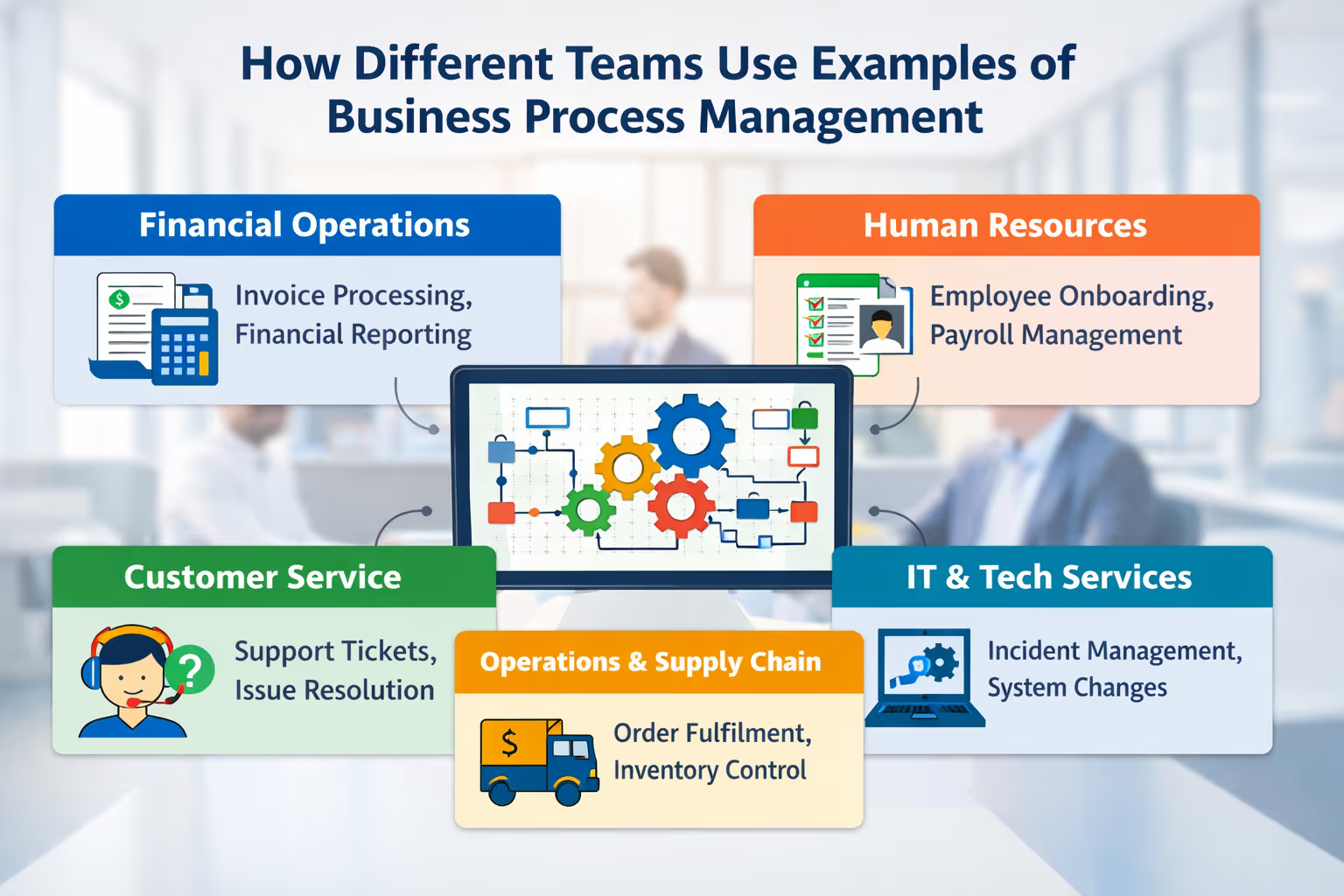
1. Financial Operations and Control
Finance teams use BPM to streamline repetitive and critical financial workflows.
Typical applications include:
- Invoice approvals and processing
- Accounts payable and receivable
- Financial audits and reporting
This reduces manual errors and improves compliance. Studies show that companies implementing BPM can achieve up to 30% cost reduction and 40% efficiency improvement
2. Workforce and Talent Management
HR teams apply BPM to standardize employee-related processes.
Common examples:
- Employee onboarding and exit processes
- Payroll and benefits administration
- Performance evaluation workflows
This ensures consistency and reduces administrative overhead.
3. Customer Experience and Support Workflows
Customer-facing teams rely on BPM to deliver faster and more consistent service.
Key use cases:
- Customer onboarding journeys
- Support ticket handling
- Issue escalation and resolution
Retailers use BPM alongside commerce accelerator solutions to enhance service delivery and operational efficiency.
4. Operational Execution and Logistics
Operations teams use BPM to coordinate complex workflows across supply chains.
Examples include:
- Order fulfillment processes
- Inventory tracking systems
- Supplier and logistics coordination
This ensures smooth operations and minimizes delays.
5. Technology and IT Service Management
IT departments use BPM to manage internal systems and service requests efficiently.
Examples include:
- Incident resolution workflows
- User access requests
- System change management
This helps maintain system stability and reduces downtime.
Examples of Business Process Management Across Industries
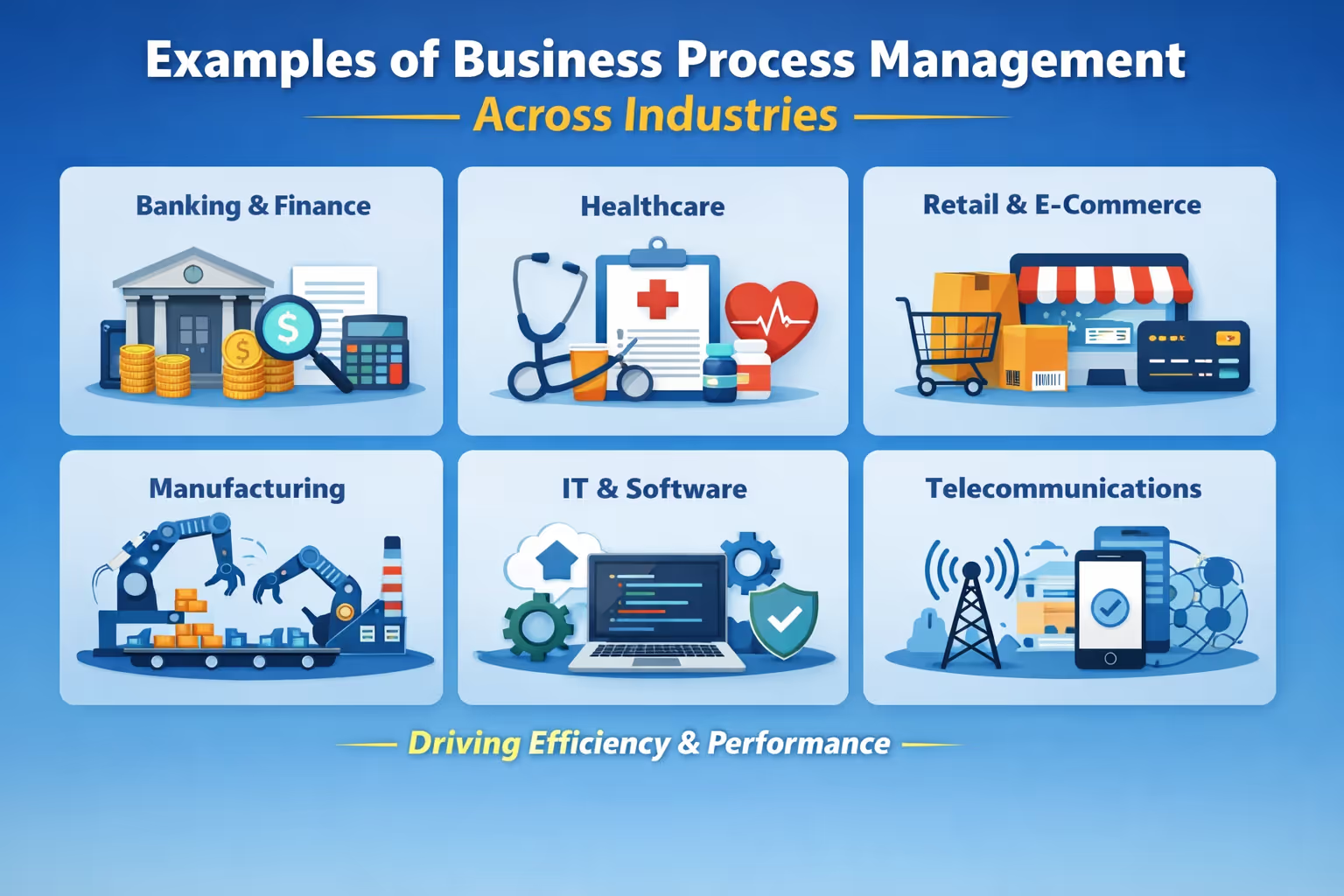
1. Financial Institutions and Banking
- Loan processing and approvals
- Fraud detection systems
- Regulatory compliance workflows
BPM enables faster and more accurate financial decision-making.
2. Healthcare and Medical Services
- Patient registration and intake
- Billing and insurance claims
- Medical data management
BPM helps healthcare providers improve efficiency while meeting compliance standards.
3. Retail and Online Commerce
- Order management systems
- Inventory control processes
- Customer engagement workflows
Retailers use BPM to enhance service delivery and operational efficiency.
4. Manufacturing and Production
- Production scheduling
- Quality assurance processes
- Supply chain coordination
BPM improves productivity and reduces operational bottlenecks.
5. Software and IT Services
- Product development workflows
- Incident and change tracking
- DevOps coordination
BPM enables faster delivery and better collaboration between teams.
6. Telecom and Network Services
- Customer request handling
- Network monitoring workflows
- Service management processes
BPM ensures reliability and consistent service quality.
Common Examples of Business Process Management in Daily Operations
Businesses rely on structured workflows every day to maintain efficiency and consistency. These common examples of business process management show how BPM is applied across routine operations to reduce manual effort and improve outcomes.
- Customer onboarding workflows
Automating data collection, verification, and account setup to deliver a faster and smoother onboarding experience. - Order processing systems
Managing the complete order lifecycle from placement to delivery while minimizing errors and delays. - Employee onboarding processes
Standardizing hiring workflows, including documentation, training, and system access. - Invoice and payment processing
Automating invoice validation, approvals, and payments to improve financial accuracy. - IT incident management
Tracking, prioritizing, and resolving technical issues to ensure system reliability. - Marketing campaign workflows
Coordinating campaign planning, approvals, execution, and performance tracking. - Procurement and vendor management
Streamlining supplier selection, approvals, and purchase orders to control costs. - Compliance and audit tracking
Maintaining audit trails and ensuring adherence to regulatory requirements.
How HeadToNet Helps You Implement Business Process Management
While understanding BPM examples is important, the real value comes from implementing these processes effectively within your organization.
HeadToNet helps businesses design, optimize, and automate workflows using a data-driven approach. By combining business process management with advanced data and analytics capabilities, organizations can gain complete visibility into their operations and continuously improve performance.
With HeadToNet, businesses can:
- Streamline complex workflows across departments
- Integrate BPM with enterprise data systems
- Monitor processes in real time
- Identify inefficiencies and optimize performance
- Scale operations with intelligent automation
Whether you're in finance, healthcare, retail, or IT, HeadToNet enables you to build efficient, scalable, and data-driven business processes that deliver measurable results.
Ready to eliminate inefficiencies and scale faster?
[Book a Free Consultation]
Conclusion
Business Process Management is an important skill for businesses nowadays. It helps businesses run more smoothly, work more efficiently, and give customers better service.
BPM in the real world shows how companies in many different fields employ organized workflows and automation to get results that can be measured.
BPM becomes even more powerful when it is used with enterprise data architecture and analytics. This lets businesses work smarter, faster, and more effectively.
Companies that put money into BPM now are better able to grow and compete in a world where data is king.
FAQ Section
What are some examples of managing business processes?
Some examples are client onboarding, processing invoices, managing the supply chain, approving loans, and customer service workflows.
What is the management of business processes?
Business Process Management is the process of making workflows better and more automatic so that they work faster and with fewer mistakes.
What is the point of BPM?
BPM helps businesses save money, work more efficiently, and give customers better service.
What kinds of businesses utilize BPM?
BPM is widely used in the healthcare, finance, retail, telecom, and industrial sectors.
What does BPM do to help businesses accomplish better?
BPM helps people do their jobs better by automating tasks, cutting down on delays, and giving them data-driven information to help them make better decisions.
StackAudit Offer