Benefits of Enterprise Data Warehouse: Why Modern Businesses Depend on EDW

In today's corporate world, data is the most important thing to base decisions on. Every day, companies produce a tremendous amount of data through transactions, contacts with customers, digital channels, IoT devices, and systems. Most companies experience problems such as fragmented insights, inconsistent reporting, and slow decision cycles due to a lack of a systematic approach for managing and evaluating data.
This is when an Enterprise Data Warehouse (EDW) becomes very important.
An enterprise data warehouse is a central place for data that gathers, combines, and organizes data from many different parts of a business. It lets businesses turn raw data into useful information that can be used for analytics, business intelligence, artificial intelligence, and strategic planning.
Many companies today employ enterprise data warehouse architecture as the main part of their data ecosystem. Businesses may get insights faster, run their operations more efficiently, and make better decisions based on data by understanding the broader data warehouse benefits of centralized analytics platforms. Companies that want to deploy advanced analytics, cloud data platforms, and AI-powered decision systems need enterprise data warehouses more than ever as digital transformation speeds up.
What is an Enterprise Data Warehouse
An Enterprise Data Warehouse (EDW) is a central place where data from many different business systems in an organization may be stored, combined, and analyzed.
An EDW combines data from different operational systems, such as:
- CRM platforms
- Systems for finance
- Marketing
- ERP
- Databases for customer service
- Operations database
This integrated platform lets businesses look at data from various divisions and get insights that apply to the whole company.
EDW vs Traditional Data Warehouse
Data warehouses that are traditional frequently just look at certain departments or business divisions. But an enterprise data warehouse meets all of the data needs of the whole business.
EDW vs Data Lake
A data lake keeps raw, unstructured data, while an enterprise data warehouse keeps structured, vetted data that is ready for analysis.
EDW vs Data Mart
A data mart is a tiny component of a data warehouse that a certain department, like finance or marketing, uses.
An EDW generally sends data to several data marts, which give departments their own insights while keeping control centralized.
Enterprise Data Warehouse Architecture Overview
A modern EDW architecture usually has:
- Pipelines for ingesting data
- ETL or ELT processing levels
- Layers for storing data
- Metadata and governance frameworks
- Analytics and BI tools
These parts work together to make a corporate analytics platform that can grow and enable reporting, forecasting, and predictive analytics.
Why Businesses Need Enterprise Data Warehouses
Many companies have trouble with data systems that are broken up, which makes their operations less efficient.
Some common problems are:
Data Silos
Since different departments save their data in different places, it's hard to get a complete picture of the firm.
Inconsistent Metrics
If there isn't a central authority, separate departments might use different methods to calculate metrics, which could lead to reports that don't agree.
Slow Reporting
When you need to make reports from more than one system, you often have to combine data by hand.
Limited Data Visibility
It is not easy for decision makers to get thoughts from all around the firm.
An enterprise data warehouse overcomes these difficulties by letting you manage your data in one place that is always the same and can grow with your business.
12 Key Benefits of Enterprise Data Warehouse
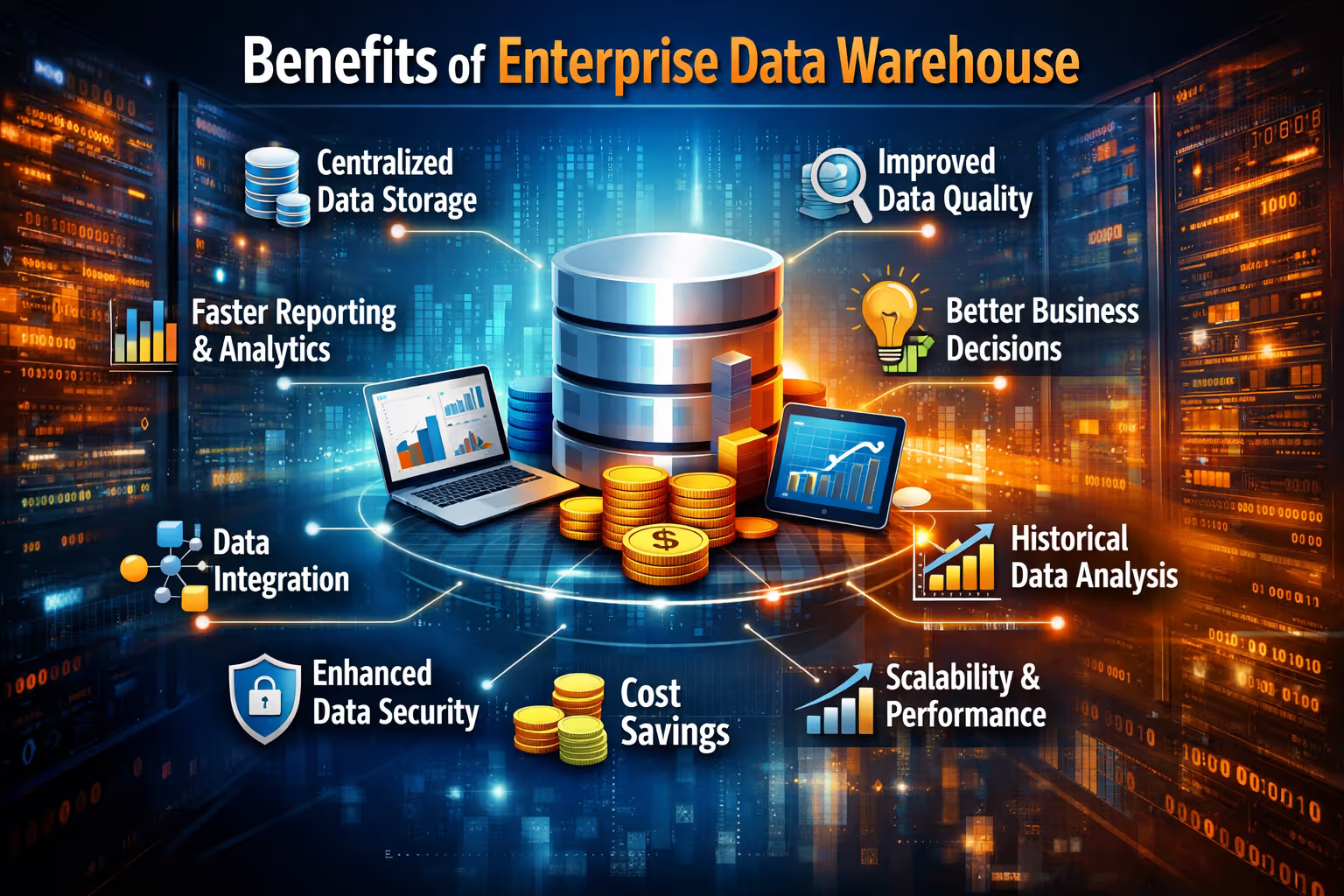
1. Centralized Data Management
An enterprise data warehouse brings together data from many different platforms into one place.
This gets rid of scattered data storage and makes the architecture of enterprise data easier.
Companies get a single picture of their operations, customers, and performance data.
2. Single Source of Truth
The development of a single source of truth is one of the best things about enterprise data warehouse solutions.
When all departments use the same data model and governance structure, reports become:
- More consistent
- Decisions become better, and
- Business metrics stay in line.
3. Faster Decision Making
With built-in analytics and business intelligence capabilities, executives may see dashboards and insights in real time.
This helps people make decisions quickly in areas like:
- Pricing tactics
- Customer service
- Managing inventory
- Planning operations
4. Advanced Analytics and Business Intelligence
Modern business intelligence tools run on enterprise data warehouses.
Organizations can do:
- Trend analysis
- Forecasting
- Predictive analytics
- Machine learning modeling
Retailers, for example, use EDW systems to analyze the manner in which customers buy goods and improve their marketing strategies.
5. Improved Data Quality and Governance
The data governance framework of EDW systems ensures that data is:
- Correct
- Standardized
- Vetted
- Safe.
Many organizations also adopt a data maturity framework to evaluate how effectively data is managed, governed, and utilized across business functions.
6. Historical Data Analysis
A corporate data warehouse keeps a lot of old data.
Businesses can look at long-term trends, like:
- How customers act over time.
- How well the company does financially
- Efficiency in operations
- Changes in market demand
Analyzing historical data helps companies make better judgments.
7. Scalability for Large Data Volumes
Businesses today produce huge datasets.
Enterprise data warehouses are made to grow horizontally and support:
- Data storage on a petabyte scale
- Fast queries
- Distributed computing environments
Cloud data warehouse platforms have made scalability much better.
8. Improved Reporting Performance
When dealing with enormous datasets, traditional reporting systems sometimes have trouble with performance.
EDW systems improve reporting by using:
- Indexed storage
- Columnar databases
- Query optimization engines
This lets companies make reports in seconds instead of hours.
9. Cross-Department Collaboration
A corporate data warehouse lets people from different departments work together by giving them access to the same analytical tools.
For instance
- Marketing teams look at customer data.
- Finance teams look at metrics for revenue.
- Operations personnel keep an eye on how well the supply chain works.
All departments use the same set of data to do their jobs.
10. AI and Machine Learning Readiness
AI models need a lot of clean, well-organized data.
Enterprise data warehouses give a solid set of data for:
- Predictive analytics
- Recommendation systems
- Demand forecasting
- Models for finding fraud
A lot of newer EDW platforms work directly with machine learning tools.
11. Improved Compliance and Security
Businesses have to follow tight rules, including the
- GDPR
- HIPAA
- Rules for financial reporting.
Enterprise data warehouses help with compliance by using
- Role-based access control
- Encryption
- Audit logs
- Governance standards.
12. Competitive Business Advantage
Companies that use corporate analytics tools have a strategic edge because they can:
- Spot market trends earlier
- Make operations more efficient
- Make customers happier.
Companies that use data to make decisions are always more efficient and profitable than their competitors.
Enterprise Data Warehouse vs Data Lake
A lot of businesses now adopt lakehouse architectures that mix both platforms.
Enterprise Data Warehouse Architecture
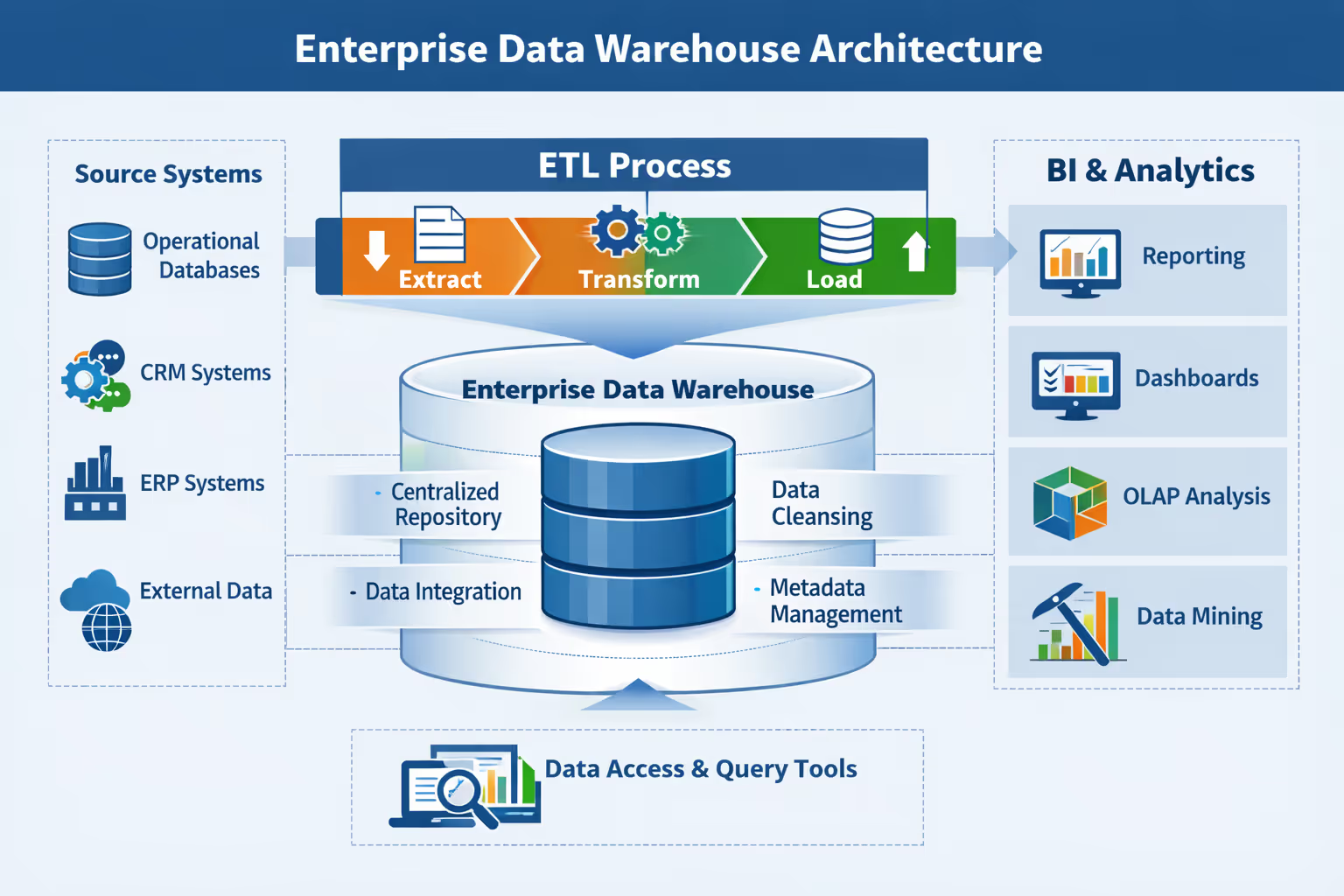
A modern enterprise data warehouse architecture usually has more than one tier.
Data Ingestion Layer
Data is gathered from several sources, including
- Operational databases.
- Apps that run on the cloud
- Cloud platforms
- IoT systems
ETL / ELT Pipelines
Data pipelines change raw data into structured forms.
The steps of an ETL process are:
- Extraction
- Transformation
- Loading.
Data Storage Layer
This layer keeps structured business datasets that are ready for analysis.
People often use cloud data warehouse tools like Snowflake, BigQuery, and Redshift.
Semantic Layer
The semantic layer turns complicated data models into concepts that are easy for businesses to understand.
It makes it easy for analysts and those who make decisions to work with data.
BI and Analytics Tools
Power BI, Tableau, and Looker are examples of tools that connect to the EDW and produce dashboards and insights.
Companies that engage with enterprise data and analytics experts like HeadToNet can create optimal EDW architectures that can handle large-scale analytics and enterprise reporting systems.
Ready to Turn Your Data into a Competitive Advantage?
[Book a Free Consultation]
Common Enterprise Data Warehouse Use Cases
Enterprise data warehouses help with a lot of business tasks.
Customer Analytics
Companies look at customer journeys, buying habits, and KPIs for keeping customers.
Financial Reporting
The finance teams make reports that are correct on revenue, costs, and profits.
Supply Chain Intelligence
Companies make the most of their logistics, inventory, and supplier performance.
Marketing Analytics
Marketing teams look at how well campaigns are doing and how customers are grouped.
Predictive Analytics
Businesses guess how much demand there will be, what risks there are, and how customers will act.
Industries Using Enterprise Data Warehouses
Healthcare
Hospitals employ EDW systems to combine patient information, clinical data, and operational analytics.
Banking and Finance
Banks employ business data warehouses to find fraud, manage risk, and report to regulators.
Retail
Retailers look at how customers buy things and make sure they have the right amount of stock.
Telecommunications
Telecom companies look at how much their networks are used and how many customers leave.
Manufacturing
Enterprise analytics tools help manufacturers improve their supply chain performance and plan their output better.
Challenges of Implementing an Enterprise Data Warehouse
Even though an EDW has many benefits, it needs careful planning to put into place.
Cost
Infrastructure, tools for integrating data, and qualified workers can all add to the cost of implementation.
Implementation Complexity
To connect different systems, you need to be very good at corporate data architecture.
Data Integration Issues
Many businesses have trouble getting old systems to work with new cloud platforms.
Governance
It might be hard to keep the same data governance rules in place in all departments.
Modern Trends in Enterprise Data Warehousing
Enterprise data platforms are still changing quickly.
Cloud Data Warehouses
Cloud-native EDW platforms are more scalable, cost-effective, and quick to set up.
AI Driven Analytics
AI-powered analytics tools make insights and predictive modeling automatic.
Real-Time Analytics
More and more, businesses depend on streaming data pipelines to make decisions in real time.
Lakehouse Architecture
Modern data architectures take the best parts of data lakes and data warehouses and put them together.
Conclusion
Enterprise data warehouses are becoming a key part of many digital businesses.
EDW solutions help businesses turn data into strategic assets by centralizing it, boosting analytics, and allowing for better decision-making. Companies that spend money on strong enterprise data architecture and analytics platforms get a lot of benefits in terms of efficiency, innovation, and competitive positioning.
Enterprise data warehouses will remain an important part of enterprise intelligence as more and more firms employ cloud technologies, AI-driven analytics, and real-time data processing.
Companies that collaborate with skilled enterprise data and analytics partners like HeadToNet can speed up deployment and get the most out of data-driven decision-making.
Stop Guessing - Start Making Data-Driven Decisions
[Talk to Our Experts]
FAQ Section
What is an enterprise data warehouse?
An enterprise data warehouse is a central place for data that combines data from many different business systems to help with reporting, analytics, and business intelligence.
Why do companies use enterprise data warehouses?
Companies utilize EDW systems to bring together data, make reports more accurate, support advanced analytics, and help people make decisions based on data.
What is the difference between an enterprise data warehouse and a data lake?
An enterprise data warehouse holds structured data that is ready for analysis, whereas a data lake holds raw data that is mostly utilized for data science and big data processing.
What are the good things about an enterprise data warehouse?
Centralized data administration, faster analytics, better data governance, better reporting performance, and support for AI and machine learning are some of the main benefits.
How long does it take to set up an enterprise data warehouse?
It usually takes 3 to 12 months to set up an EDW. This depends on how complicated the data is, how the systems need to work together, and what kind of infrastructure is used.
StackAudit Offer