Why Modern Businesses Need Generative AI Consulting Services

AI has moved out of the testing phase. It is now sitting inside marketing teams, product teams, finance teams. Leaders are no longer asking if they should explore it. They are asking how to make it work without creating chaos.
That is where a Generative AI Consultant comes in. The role is not just technical. It sits somewhere between strategy, technology, and risk management. Companies often begin with curiosity. They see what generative AI can do. Then they realise they need structure around it. Without that structure, tools get adopted randomly and value becomes hard to measure.
A consultant helps turn curiosity into something usable and accountable.
Move From AI Curiosity to Structured Execution
Talk to a Generative AI Expert
What is a Generative AI Consulting Services?
A Generative AI Consultant is a specialist who advises organisations on how to design, implement, and manage AI systems that generate content, automate tasks, and support decisions.
The distinction matters. Traditional IT consultants focus on infrastructure, systems, and software rollouts. Generative AI consultants focus on language models, AI copilots, automation frameworks, and knowledge retrieval systems. The technology may look impressive on its own. The real work is aligning it with business goals, operational priorities, and long-term value architecture across the organization.
They combine strategic thinking with technical depth. They also deal with governance, which many companies underestimate at the beginning. AI projects that start as small experiments can quickly grow. Without oversight, they become difficult to manage.
The consultant’s role is to prevent that drift.
Why Your Business Needs Generative AI Consulting Services
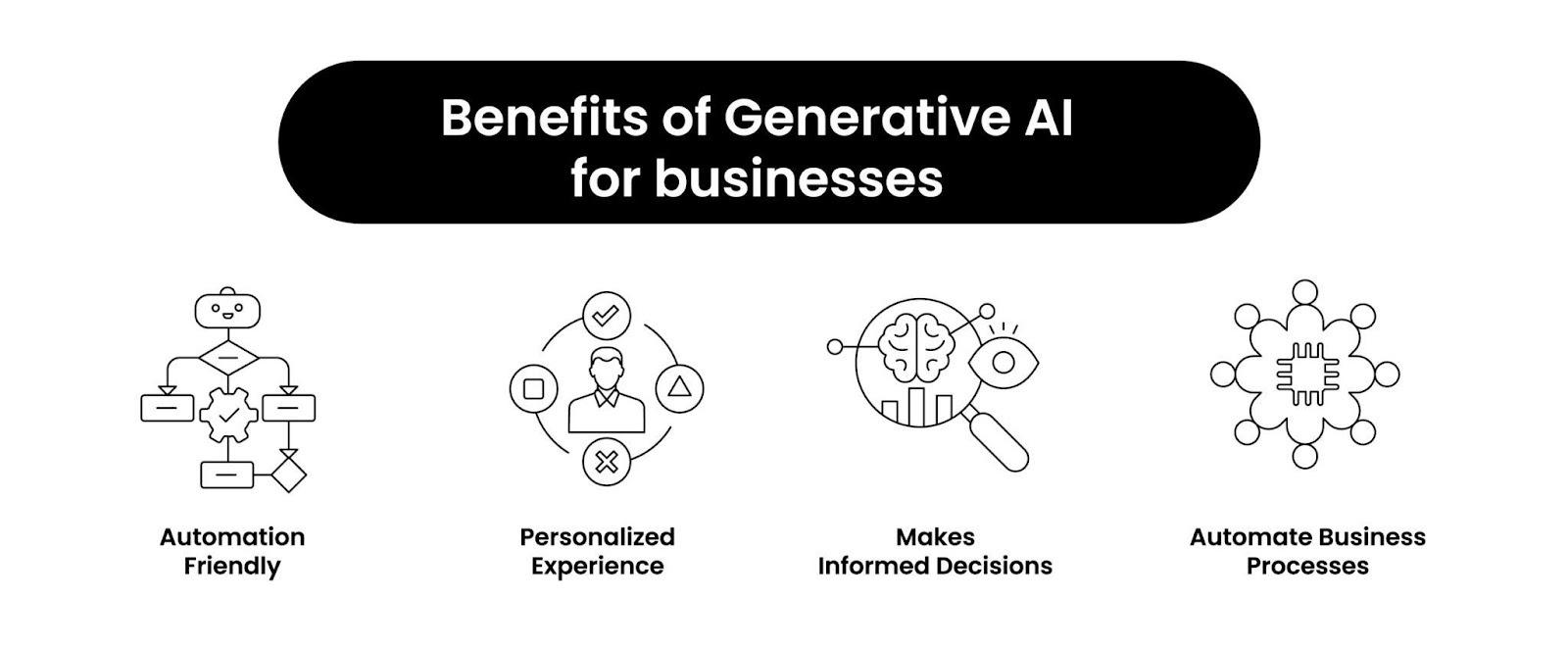
Plenty of organisations attempt to adopt generative AI internally. Some succeed. Many stall. The difference usually comes down to structure and clarity.
1. Faster Time-to-Market
AI enthusiasm is common. Clear execution plans are less common.
Consultants help narrow broad ideas into defined use cases. They identify what can realistically be built in weeks instead of months. This focus reduces delays and avoids overengineering early solutions.
Speed matters, but so does direction. Going fast without alignment is just creating rework down the line.
2. Better Decision-Making With AI
Generative AI can summarize reports, write recommendation letters, and analyze scenarios. The output often looks polished. That does not always mean it is contextually accurate.
Consultants ensure that AI systems operate within defined parameters. They establish validation steps and reliability standards. Business leaders receive outputs that are structured and reviewed, not blindly accepted.
3. Cost Optimization and Productivity
Automation is one of the main drivers behind AI adoption. Hours every week are spent on internal documentation, reporting, proposal writing, and repetitive communication.
Organized generative AI consulting services examine areas of automation that will yield significant benefit. The goal is not to replace people. It is on reducing manual effort so teams can focus on higher value work.
4. Risk, Security, and Compliance
Data privacy is a big concern. So is the risk of intellectual property and regulatory requirements.
Consultants establish governance frameworks before the technology is leveraged. They decide on data access, logging, and usage policies. Ethical AI principles are codified, not presumed.
The company that doesn’t do this will come back to fix it later, which is harder and more costly.
5. Scalability and Change Management
A pilot may work well in one department. Expanding it across the organisation is another challenge entirely.
Consultants build roadmaps that are usually divided in various phases. Along with that they also support communication and training efforts. Implementation needs clarity and comfort. Employees must be assured of the role of AI in their work, not a replacement for it.
Without change management, even the best-designed systems fail to gain adoption.
What Does a Generative AI Consultant Actually Do?
The day to day work is varied. It moves between strategy sessions, architecture planning, and operational reviews.
1. AI Readiness Assessment and Strategy Roadmap
Most engagements begin with an assessment. Consultants assess data infrastructure, system maturity, and leadership alignment.
They analyze strengths and weaknesses. A roadmap of high-impact projects, timelines, and deliverables is created. This becomes the point of reference for the project.
2. Use Case Discovery and ROI Prioritization
You cannot justify all the investment simply based on ideas. Consultants examine workflows in marketing, operations, sales, HR, and finance.
They evaluate which use cases can deliver measurable improvements in efficiency or revenue. This prevents scattered experimentation. It also focuses resources on high return initiatives.
3. Data Readiness, Governance, and Responsible AI
Generative models depend too much on clean and structured data. If you feed inconsistent or incomplete data it will cause unreliable models.
Consultants also establish the governance structure that defines the level of ownership, access, and quality.
Responsible AI should be a main mindest of operation.
4. Prototype (POC) Development and Testing
If the company has a new idea, it may start by creating a small version of it. This helps determine if the idea actually works, without spending too much money on it.
At this time, the company is helped by consultants. They ensure the new system works well with the existing systems and helps the business achieve its objectives. Feedback is also sought during this time, so small changes can be made.
5. Deployment, Integration, and Team Enablement
If you are planning to move from the prototype environment to the production environment, you will need requires proper system.
Consultants also ensure the integration of CRM, internal communications, and enterprise software. They also facilitate training sessions and documentation to support adoption.
Technology implementation without enablement rarely succeeds.
Ready to Build AI That Scales Securely?
Schedule a Strategy Consultation
How HeadToNet Supports Enterprise Generative AI Adoption
HeadToNet provides clear and structured generative AI consulting services, and their approach is built for large organisations. This is because, in an enterprise environment, planning, security, and scalability really matter. The approach combines advisory strategy with secure architecture design and governance planning.
It’s all about scalable implementation and not experimentation. HeadToNet adds the roadmap into the business process to ensure productivity gains are achieved without losing control and oversight.
Common Use Cases of Enterprise Generative AI Solutions
Enterprise adoption now spans multiple functions.
Customer Support Automation (Chatbots & Assistants)
AI assistants handle routine queries, escalate complex cases, and generate case summaries. This improves response consistency and reduces workload pressure.
Marketing Content and Personalization
Generative models create campaign copy, personalise messages, and track campaign metrics.
Human oversight remains important, but production cycles become faster.
Sales Enablement (Proposals, Emails, CRM Notes)
AI tools help teams draft proposals, send follow-up emails, and create clear summaries in the CRM.
Sales teams can work faster and stay organised, while still keeping their information accurate and consistent.
HR and Internal Process Automation
Recruitment workflows benefit from automated job descriptions and candidate summaries.
Internal documentation becomes easier to maintain.
Document Summarization and Knowledge Management
Large document repositories can be indexed and summarised through AI assistants.
If you have access to internal knowledge, it will reduce the search time.
Code Generation and Developer Productivity
Many developers use AI copilots, which help them generate code drafts and identify potential errors.
The result is faster iteration, supported by human review.
How Generative AI Consultants Work (Step-by-Step Process)
A structured process improves consistency and accountability.
1. Discovery and Alignment
The stakeholders define objectives aligned with strategic priorities.
2. Blueprinting and Solution Design
Architectural diagrams and governance models are created before development begins.
3. Development and Integration
Technical teams configure integrations, establish data pipelines, and validate system compatibility.
4. Testing, Deployment, and Optimization
The solutions are checked against performance standards that are defined earlier. It is also checked against deployed into production, and refined over time.
How to Choose the Right Generative AI Consultant Services
Partner selection has long term implications.
Industry Experience + Proven Case Studies
Demonstrated results in complex environments indicate practical capability.
Security, Compliance, and Governance Expertise
With help of strong governance expertise you can reduce operational and regulatory risk.
Ability to Build Scalable AI Solutions
The scalability must be embedded in your system design. It should not be added later.
Post-Deployment Support
Ongoing monitoring and iterative improvement sustain performance.
There are organisations such as HeadToNet who combine strategic advisory services with hands on execution, which help the businesses move beyond experimental pilots.
Conclusion
Generative AI is transforming how organisations create content, automate workflows, and support decision-making. Success requires more than tool deployment it demands structured guidance across strategy, architecture, governance, and change management.
Generative AI Consultants turn AI investments into measurable results. For enterprises seeking sustainable innovation, disciplined and structured adoption is now a strategic priority rather than an experimental initiative. Integrating generative AI with existing AI analytics solutions ensures insights and automation work together to drive tangible business outcomes.
Turn Generative AI Into Enterprise Advantage
Contact Us
StackAudit Offer